Cultivating Ecological Intelligence

Regenerative grazing landscape with cattle in tropical savanna

Regenerative consulting & training for living systems

WeCology bridges the gap between ecological intention and measurable outcomes. Through holistic land management frameworks, ecosystem restoration design, and rigorous verification protocols, we help land stewards build regenerative futures grounded in data and wisdom.

Everything is Connected

True regeneration requires more than good intentions—it demands a sophisticated understanding of ecological relationships, verifiable measurement systems, and the wisdom to honor complexity. We call this Ecological Intelligence.

Holistic Frameworks

We work within holistic land management systems that recognize the interconnection of soil, water, biodiversity, climate, and human communities. Every decision ripples through the whole system.

Verifiable Outcomes

Regenerative claims must be grounded in rigorous data. Through standardized ecological outcomes verification (EOV), we transform field observations into credible, audit-ready evidence.

Technology as Ally

AI and digital tools can amplify ecological intelligence when designed with care. We integrate technology not to replace human wisdom, but to scale regenerative practices and deepen our understanding of living systems.

The Four Ecosystem Processes: A Revolutionary Lens for Regeneration

For billions of years, life has been learning. Every organism, every ecosystem, every watershed is a living library of accumulated wisdom—solutions forged through endless cycles of adaptation, failure, and emergence. This is Ecological Intelligence: the deep pattern language of life itself.

The Four Ecosystem Processes

Holistic Management identifies four fundamental processes that govern the function of every ecosystem on Earth. These are not abstractions—they are the actual mechanisms through which life creates the conditions for more life. Understanding them is the key to reading the landscape, diagnosing dysfunction, and catalyzing regeneration.

💧

The Water Cycle

Effective · Ineffective

Water is life's primary medium—the universal solvent that carries nutrients, moderates temperature, and enables every biological process. But the question is not simply "how much rain falls?" The question is: what happens to the water when it arrives?

In a functioning ecosystem, rainfall infiltrates deeply into the soil, recharging aquifers, feeding springs, sustaining streams through dry seasons. The landscape acts as a sponge, holding water high in the watershed and releasing it slowly over time. This is an effective water cycle.

In a degraded ecosystem, water runs off the surface, carrying topsoil with it. Floods follow droughts in rapid succession. Rivers become flashy and unpredictable. Groundwater drops. Springs go dry. The landscape sheds water as quickly as it arrives—an ineffective water cycle.

Reading the Landscape

  • Are there signs of erosion—gullies, rills, pedestalled plants?
  • How quickly does the soil absorb rainfall? Does water pool or infiltrate?
  • Is there evidence of water moving below the surface—seeps, springs, wetland plants?
  • What percentage of the soil surface is covered by living plants, litter, or biological crust?
🔄

The Mineral Cycle

Rapid · Slow

Every atom in your body was once in the soil. Every atom in the soil will one day be in something living. The mineral cycle is the great wheel of elements—carbon, nitrogen, phosphorus, potassium, and dozens more—moving between the living and the non-living, between soil, plant, animal, atmosphere, and back again.

In a healthy ecosystem, this cycle spins rapidly. Dead material is quickly consumed by decomposers, nutrients are released and immediately captured by roots, carbon flows continuously between atmosphere and soil. The system leaks very little—nutrients are cycled, not lost.

In a degraded ecosystem, the cycle stalls. Dead plant material oxidizes slowly, releasing carbon to the atmosphere without feeding soil biology. Nutrients leach away or blow off as dust. The system hemorrhages fertility, requiring ever-greater external inputs to maintain productivity.

Reading the Landscape

  • Is dead plant material being rapidly incorporated into the soil or accumulating on the surface?
  • What is the color and structure of the topsoil? Dark, crumbly soil indicates active biology.
  • Are there earthworm castings, fungal networks, signs of abundant soil life?
  • Do plants show signs of nutrient deficiency despite apparent fertility?
☀

Energy Flow

Maximum Solar Harvest · Minimal Capture

The sun pours energy onto Earth's surface every day—a staggering abundance that powers all life. But this energy cannot be stored directly. It must be captured by photosynthesis, converted into the chemical bonds of living tissue, and passed through food webs before dissipating as heat. The question for any landscape is: how much of this solar bounty are we capturing?

A thriving ecosystem presents maximum leaf area to the sun for maximum duration. Multiple layers of vegetation—canopy, understory, groundcover—intercept light at every level. Growing seasons are extended through plant diversity. The landscape is a green, living solar panel.

A degraded ecosystem squanders solar wealth. Bare ground reflects heat back to space. Monocultures capture light for brief seasons then stand dormant. Sparse vegetation leaves most photons unharvested. The potential productivity simply radiates away.

Reading the Landscape

  • What percentage of available sunlight is being intercepted by living green leaves?
  • How many days per year does the landscape have actively growing plants?
  • Is there structural diversity—multiple layers of vegetation capturing light?
  • Are there areas of bare ground where solar energy is simply reflected away?
🌿

Community Dynamics

Succession · Regression

Life creates the conditions for more life. Pioneer species modify harsh environments, making them suitable for the next wave of colonizers. Complexity begets complexity. Diversity begets stability. This is succession—the tendency of living systems to develop toward greater sophistication, more intricate relationships, deeper resilience.

In a healthy ecosystem, community dynamics trend toward increasing biodiversity. Predators regulate prey. Pollinators enable reproduction. Decomposers close nutrient loops. Every species is embedded in a web of relationships that strengthen the whole. The system becomes increasingly self-organizing and self-healing.

In a degraded ecosystem, the arrow reverses. Complexity unravels. Specialists give way to generalists. Food webs simplify. The system loses its capacity to regulate itself, becoming vulnerable to pest outbreaks, disease, invasion. Resilience crumbles.

Reading the Landscape

  • Is species diversity increasing or decreasing over time?
  • Are indicator species present that signal healthy ecosystem function?
  • Is there evidence of multiple trophic levels—predators, prey, decomposers?
  • Does the landscape recover quickly from disturbance, or does it regress?

A Unified Lens for All Ecosystems

The power of this framework lies in its universality. These four processes operate in every ecosystem on Earth—from arctic tundra to tropical rainforest, from grassland to wetland, from coastal dune to alpine meadow. The specific expressions differ, but the underlying principles remain constant.

This means that Ecological Intelligence is transferable. Once you learn to read the water cycle in a British pasture, you can read it in an African savanna. Once you understand community dynamics in a temperate forest, you can observe them in a coral reef. The four processes become a universal language for understanding landscape health—regardless of climate, geography, or ecosystem type.

Grasslands & Savannas

Co-evolved with large herbivores whose grazing, trampling, and dung deposits accelerate mineral cycling. Fire and drought are natural disturbances that maintain community dynamics. The grasses' deep roots are the primary mechanism for building soil carbon.

Forests & Woodlands

Vertical stratification maximizes energy capture through canopy layers. Fungal networks (the "wood-wide web") facilitate mineral cycling and community communication. Water cycle effectiveness depends on deep litter layers and understory vegetation.

Wetlands & Riparian Zones

Keystone ecosystems for regional water cycles—they slow, spread, and sink water across landscapes. Extraordinarily productive for energy capture. Critical habitat nodes that support disproportionate biodiversity.

Arid & Semi-Arid Lands

Where water is limiting, the water cycle becomes paramount. Biological soil crusts, widely-spaced vegetation, and episodic productivity require nuanced management. Rest periods between disturbances are critical.

All Life in the Soil, Then All Life Above

If Ecological Intelligence has a starting point, it is beneath our feet. The soil is not merely a medium for plant roots—it is the most biologically diverse habitat on Earth. A single gram of healthy soil contains more microorganisms than there are humans on the planet. This teeming underground community is the foundation upon which all terrestrial life depends.

"The nation that destroys its soil destroys itself." — Franklin D. Roosevelt

The four ecosystem processes converge in the soil. Water infiltration depends on soil structure. Mineral cycling is mediated by soil biology. Energy flows through root systems into fungal networks. Community dynamics begin with the bacteria, fungi, protozoa, nematodes, and arthropods that form the soil food web.

Regenerate the soil, and the rest follows. Healthy soil grows healthy plants. Healthy plants support healthy animals. Healthy animals contribute to healthy communities—including human communities. The path to planetary regeneration begins with restoring the living skin of the Earth.

Soil → Water

Regulates floods, sustains springs, moderates climate

Soil → Food

Nutrient-dense soil grows nutrient-dense food

Soil → Climate

Largest terrestrial carbon sink on Earth

Soil → Biodiversity

Below-ground diversity enables above-ground life

Soil → Civilization

Every civilization that depleted its soil has collapsed

Ecological Outcome Verification

The Savory Institute's Ecological Outcome Verification (EOV) protocol translates Ecological Intelligence into measurable outcomes. Rather than prescribing specific practices, EOV measures the health of the four ecosystem processes directly—providing a universal standard that works across all ecosystem types and management approaches.

This is a crucial distinction. Traditional certification asks: "What did you do?" EOV asks: "What happened?" The focus shifts from practices to outcomes, from inputs to results, from intention to impact.

Soil Health

Measuring organic matter, infiltration rates, biological activity, and structural stability.

Biodiversity

Assessing species richness, functional diversity, and indicator species presence.

Ecosystem Function

Evaluating water cycle effectiveness, living ground cover, and signs of succession.

Through systematic monitoring using these indicators, land managers can track trajectory over time, verify regenerative outcomes, and adapt management based on evidence rather than assumption. This is Ecological Intelligence made operational—wisdom grounded in data.

Together, Let's Restore Ecosystem Function

Ecological Intelligence is not a theory to be debated—it is a capacity to be developed. Like any intelligence, it grows through practice, observation, and humble engagement with the living world. Every landscape is a teacher. Every season brings new lessons. Every mistake is data.

The four ecosystem processes give us a framework for asking the right questions. Is the water cycle becoming more or less effective? Is mineral cycling speeding up or slowing down? Are we capturing more or less solar energy? Is the community becoming more or less complex?

These questions apply whether you're managing a smallholding or a national park, a family farm or a corporate estate, a conservation project or a carbon development. They apply in every climate, every ecosystem, every context.

We are not separate from the ecosystems we seek to restore. We are participants in them—and our own regeneration is inseparable from the regeneration of the land. Everything is connected.

Explore Our Services

Services

From farm-scale holistic management to landscape-level ecosystem restoration, WeCology provides the expertise and frameworks to make regenerative outcomes measurable, verifiable, and financially viable.

Ecological Outcomes Verification (EOV)

Transform land management into credible impact

As a Savory Institute-accredited EOV practitioner, I help regenerative agriculture projects generate rigorous, standardized data that meets the requirements of carbon standards, impact investors, and certification bodies. EOV provides the evidence base for holistic planned grazing, soil health improvements, and biodiversity gains.

Field Monitoring

Standardized data collection protocols for soil, vegetation, biodiversity, and landscape function

Baseline Assessments

Establish verifiable starting points for regenerative transitions

Impact Reporting

Audit-ready documentation aligned with carbon standards and ESG frameworks

Permaculture Design & Ecosystem Restoration

Design living systems that heal and regenerate

From degraded landscapes to thriving ecosystems—permaculture design creates regenerative solutions that work with natural patterns. I provide site assessments, master planning, and implementation support for farms, estates, conservation projects, and community spaces seeking to restore ecological function while meeting human needs.

Site Analysis

Comprehensive assessment of water, soil, climate, access, and existing resources

Design & Planning

Integrated designs for agroforestry, water systems, habitat restoration, and productive landscapes

Implementation Support

Guidance through phased implementation and adaptive management

Holistic Land Management Training

Build capacity for regenerative decision-making

Holistic Management provides a decision-making framework for ranchers, farmers, and land managers to align ecological, social, and financial goals. Through workshops and one-on-one coaching, I help land stewards develop holistic contexts, grazing plans, and monitoring systems that drive continuous improvement.

Workshops & Training

Tailored programs for farms, ranches, estates, and conservation organizations

Grazing Planning

Design and implement holistic planned grazing systems

Ongoing Support

Long-term partnerships to refine practices and build local expertise

Carbon Project Development

Navigate carbon markets with integrity

Carbon markets are complex, and integrity matters. I support landowners and project developers in designing carbon projects that meet the requirements of leading standards (Verra VCS, Gold Standard, Plan Vivo) while maintaining ecological and social integrity. Services include feasibility assessments, monitoring system design, and integration with GeoDataTrack for efficient field data collection.

Feasibility Studies

Assess project viability and alignment with carbon methodologies

Monitoring Design

Build cost-effective, verifiable monitoring systems using GeoDataTrack

Standard Compliance

Navigate requirements for VCS, Gold Standard, Plan Vivo, and others

Credentials

Ecological Outcomes Verification

Savory Institute

Accredited EOV practitioner trained in standardized protocols for monitoring regenerative land management outcomes across soil health, biodiversity, and ecosystem function.

Permaculture Design

Certified Designer

Comprehensive training in ecological design principles, site analysis, water systems, agroforestry, and regenerative agriculture systems.

Ecosystem Restoration

Gaia University

Advanced training in ecosystem restoration methodologies, landscape-scale planning, and regenerative development frameworks.

Field Experience

UK · South Africa · Kenya

Practical experience implementing regenerative practices across diverse ecosystems, from British farmland to African savannas, with current partnerships including TruQuest South Africa.

Technology Integration

GeoDataTrack Founder

Creator of GeoDataTrack, an offline-first platform for field data collection, bringing technological innovation to regenerative monitoring and verification.

Holistic Management

Savory Framework

Deep training in holistic decision-making, planned grazing, land planning, and financial planning for regenerative operations.

Technology for Regeneration

WeCology partners with GeoDataTrack to bring cutting-edge field data collection technology to regenerative practitioners worldwide. Together, we're building infrastructure for collective ecological intelligence.

GeoDataTrack is a mobile platform designed specifically for regenerative agriculture, ecosystem restoration, and carbon verification projects. Built for practitioners working in remote areas without reliable internet, it enables rigorous field data collection that meets the standards of carbon registries, research institutions, and impact investors.

Offline-First Design

Collect data in the most remote locations without internet connectivity. All data syncs automatically when you're back online.

Audit-Ready Exports

Generate professionally formatted reports that meet carbon standard requirements for VCS, Gold Standard, Plan Vivo, and more.

Custom Protocols

Design bespoke monitoring protocols tailored to your project's specific ecological outcomes and verification needs.

EOV Integration

Native support for Savory Institute Ecological Outcomes Verification (EOV) protocols and monitoring frameworks.

Photo Documentation

Geotagged, timestamped photo evidence with automated organization and comparison tools for tracking change over time.

Multi-User Teams

Coordinate field data collection across multiple team members, properties, and monitoring sites with role-based access.

Sister Organization: GeoDataTrack operates as WeCology's technology partner, providing the digital infrastructure that makes rigorous ecological monitoring scalable and accessible. Together, we're building the data foundations for regenerative transformation.

Emergence: EI + AI + EQ

Ecological Intelligence (EI) — Deep learning forged across aeons of endless cycles of procreation, birth, life, love, eating, shitting, death and rebirth. An eternal, meaningful syntropic rhythm, culminating in 'Life' on our planet. This ancient wisdom is extremely rare and perhaps even unique in the universe.

EI · Ecological Intelligence

Ancient Wisdom

We ARE intrinsically part of this natural process, with all the reality, grit and grime that goes with it. Not above it all. Not separate from all the writhing, sperm, blood and spittle that binds and fuels all life. Unless we develop ecological literacy and understand the language of nature, we'll keep up our domination, exploitation and sterilization program, deluded that it won't lead to our own ultimate demise.

AI · Artificial Intelligence

Emerging Force

AI is marching relentlessly into our future, on a scale we barely comprehend. It seems like an enemy, an imposter. It is no doubt one of the greatest disruptors in the history of our civilization. But in nature, waste is always a resource. Difficulty is always an opportunity. Can AI possibly be an ally of immense strength and potential to bootstrap a future better than without its compounding potential?

EQ · Emotional Intelligence

Love at the Core

Human intelligence with love at its core. The bridge between ancient ecological wisdom and emerging computational power. EQ provides the moral compass, the ethical framework, the collaborative spirit needed to direct these forces toward regeneration rather than extraction.

Instead of fighting this inevitable tsunami, how about embracing it in a convergence of EI, AI, and EQ? An ultimate triumvirate to create a better future through collaboration.

The Convergence: Deep learning forged across aeons converged with AI's rapid learning capability, limitless information processing and analysis, directed by love. An emergence of something greater than the sum of its parts.

We are a part of nature, not apart from it. That we are separate is a dangerous idea.

Unity. Hope. Collaboration. Convergence. Everything is connected. Enemy or elder? The choice is ours.

💚 ☘ 🌍 💧 🩠 đŸȘ± đŸ”„ ... đŸŠŸ

Let's Go Far Together

"
"

If you want to go fast, go alone.
If you want to go far, go together.

— African Proverb

Regenerative transformation requires collaboration across disciplines, geographies, and knowledge systems. Whether you're a project developer, landowner, research institution, NGO, or fellow practitioner, WeCology welcomes partnerships grounded in shared values and mutual benefit.

Project Developers

Carbon · Biodiversity · Regenerative Ag

Scaling regenerative agriculture and ecosystem restoration projects demands rigorous monitoring, verification, and adaptive management. WeCology provides the ecological expertise and field capacity to ensure your projects deliver credible outcomes.

  • Baseline ecological assessments
  • EOV monitoring protocols (Savory Institute)
  • Carbon standard compliance (VCS, Gold Standard, Plan Vivo)
  • Long-term adaptive management support

Landowners & Managers

Farms · Ranches · Estates · Conservation Land

Transitioning to regenerative practices requires both ecological knowledge and practical guidance. Whether you're exploring holistic grazing, agroforestry, or ecosystem restoration, WeCology offers site-specific design and ongoing mentorship.

  • Holistic land management training
  • Permaculture design & planning
  • Grazing system optimization
  • Carbon credit development

Research & Education

Universities · Field Schools · Research Initiatives

Advancing regenerative science requires field-based research, practitioner knowledge, and transdisciplinary collaboration. WeCology contributes ecological expertise, field sites, and monitoring infrastructure to research partnerships.

  • Field research site access
  • Ecological monitoring data
  • Practitioner insights & co-design
  • Student field training opportunities

Technology Partners

AI · Remote Sensing · Data Platforms

Technology can amplify regenerative work when designed with ecological intelligence. WeCology collaborates with developers building tools for field data collection, AI-assisted monitoring, and decision support aligned with holistic management principles.

  • Field data validation & feedback
  • Ecological protocol design
  • AI training data for ecosystem monitoring
  • Integration with GeoDataTrack

NGOs & Impact Organizations

Conservation · Development · Climate Action

Community-based conservation and development initiatives benefit from rigorous ecological monitoring and capacity building. WeCology partners with organizations working at the intersection of ecosystem health and human wellbeing.

  • Monitoring & evaluation design
  • Local capacity development
  • Participatory research approaches
  • Impact verification for funders

Fellow Practitioners

Ecological Consultants · Regenerative Advisors

Complex projects often require diverse expertise. WeCology collaborates with fellow practitioners to deliver comprehensive solutions, share knowledge, and strengthen the regenerative consulting community.

  • Joint project delivery
  • Peer learning & skill sharing
  • Referral partnerships
  • Practice-based research collaboration

Let's Connect

Whether you're stewarding 50 acres or 50,000, developing a carbon project, or seeking to deepen your regenerative practice—let's explore how WeCology can support your journey.

I'll respond within 48 hours

Growing Wilder

The Horned Shadow — A Tale of Herne the Hunter
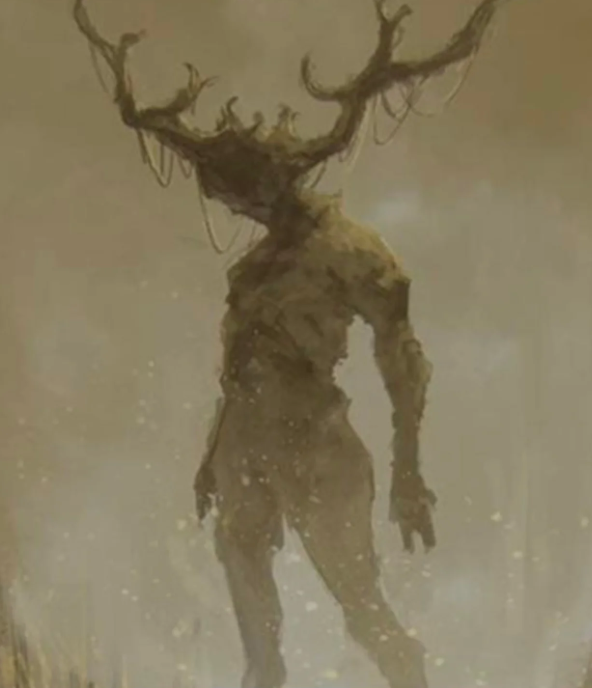
Herne the Hunter — an antlered figure emerging from the mist of the ancient Wyldwood

"A man cloaked in stag's horns, fierce as a storm, yet wise as the ancient oaks"

Chapter One: The Calling

In a village nestled at the edge of the Great Wyldwood, where the trees whispered secrets older than time, lived a boy named Torin. At sixteen, Torin was neither strong nor weak, neither bold nor timid—just a boy who drifted through life, unsure of his place. His father, a blacksmith, urged him to hammer iron and be practical. His mother, a weaver, spoke of kindness and patience. But Torin felt a restless ache, a longing for something he could not name.

One autumn evening, as the harvest moon hung low, the village elders gathered to tell tales of Herne the Hunter, the antlered spirit who haunted the Wyldwood. “He is the wild heart of the forest,” they said, “a man cloaked in stag’s horns, fierce as a storm, yet wise as the ancient oaks. Only those who dare to face him find their true strength.” The villagers warned that Herne was dangerous, that boys who ventured too deep into the wood never returned—or returned changed.

That night, Torin dreamed of a stag with eyes like embers, its antlers casting shadows that danced like flames. The stag spoke: “Find me, boy, or forever wander lost.” Torin awoke trembling, the ache in his chest now a fire. Against his parents’ wishes, he took a waterskin, a loaf of bread, and a small knife, and slipped into the Wyldwood at dawn.

Chapter Two: The First Truth — Water’s Way

The Wyldwood was not what Torin expected. He had imagined danger—wolves, perhaps, or treacherous ravines. Instead, he found himself simply… lost. Not in direction, but in something deeper. The paths all looked the same. The trees seemed to turn away from him.

By the third day, his bread was gone. By the fifth, his waterskin ran dry. Torin’s throat burned with thirst, his thoughts growing scattered and wild. He had passed streams, he realized with horror—he’d heard them but ignored them, so fixed on finding Herne that he’d dismissed the water as unimportant.

Now, truly desperate, he followed the sound of trickling water with new reverence. The spring he found bubbled between moss-covered stones, clear and cold. As he drank deeply, gasping, he saw how the water emerged from darkness beneath the rocks, fed the moss in emerald spirals, gathered in a small pool where a deer had recently visited (hoof prints in the soft mud), then spilled onward to join a larger stream below.

Water does not demand or grasp, something whispered—perhaps the wind, perhaps his own parched mind. It receives, it gives, it cycles. Nothing truly owns it. Break this circle, and all things die.

Torin rested by the spring and watched. The water that saved his life had fallen as rain on these very trees, had been drawn up through their roots, released from their leaves, fallen again. The deer that drank here carried water in her blood to her fawn. The water in Torin’s own tears—for he wept then, understanding something he couldn’t name—would return to the earth, to the spring, to the sky.

He thought of his village, where they’d built channels to control the streams, where they complained when rain fell “at the wrong time.” We treat water like an enemy or a servant, he realized. Never as kin.

Chapter Three: The Second Truth — The Mineral Path

Stronger now, Torin followed the stream downward. His hunger grew sharp as a blade. He searched for berries but found only withered remains—he had come too late in the season. His city-soft hands fumbled to dig roots, but he barely found anything edible.

On the eighth day, weak and stumbling, he came upon a clearing where a great oak had fallen, perhaps in last winter’s storms. The massive trunk lay decomposing, its bark peeling away, its wood softening into rich, dark matter. Mushrooms erupted from its sides in pale shelves. Beetles and worms worked through the decaying wood. New saplings—oak, birch, rowan—sprouted from the fertile mound where the old tree was becoming soil.

A raven landed on the fallen trunk, black eyes gleaming with what seemed mockery. It tore at the soft wood, pulled free a fat grub, swallowed it whole, then fixed Torin with a stare as if to say: You thought this was ruin? Watch. It cawed once—sharp, amused—and flew off into the canopy.

Later that afternoon, Torin nearly stepped on a mother fox’s den hidden beneath a tangle of brambles. She burst out, teeth bared in warning, kits squeaking behind her. Torin froze, hands raised. The fox held his gaze, then slowly backed away—not fleeing, but guiding him to step aside. When he did, she returned to her young, curling protectively around them. No attack came. Only the lesson: Tread lightly; your path crosses many lives.

Nothing is wasted, the wordless teaching came. Everything returns. Every death feeds life. Every ending is a beginning.

He understood then: the minerals locked in that ancient oak—drawn from stone over centuries, lifted into wood and leaf—were being released back to the soil. They would feed the saplings, the mushrooms, the beetles. The raven would carry some away in its body, release them elsewhere. Round and round, borrowed and returned, nothing ever truly lost.

That night, Torin carefully tasted one small mushroom from a type his mother had gathered. It did not kill him. He ate more. The tree was feeding him even in its death—or was it death at all? The oak seemed more alive now than when it stood, pulsing with the activity of a thousand decomposers, feeding a dozen new beings.

He thought of the village graveyard, where they buried their dead in sealed boxes, “protected” from the earth. We try to step outside the circle, he thought. As if we’re too important to return what we’ve borrowed.

Chapter Four: The Third Truth — Sun’s Gift

Days blurred together. Torin learned to move differently—more slowly, watching where he placed his feet, noticing more. He began to see patterns: where the light fell strongest, different plants grew. In the deep shade of dense pines, little grew but moss and ferns. Where lightning had struck and opened a gap in the canopy, brambles and young birch exploded in the sunlight.

One morning, he watched a patch of forest wake. As the sun rose, he saw what he had never noticed: the leaves turning to face the light. All of them. Every single leaf on every plant, adjusting, receiving. Flowers opening. Insects emerging to warm themselves. A grass snake uncoiling from its night-shelter to bask on a stone.

All life is sunlight transformed, the understanding came. Captured by the green ones, passed from life to life.

He traced the path: Sun to leaf. Leaf to caterpillar. Caterpillar to bird. Bird (in death) to beetle, to fungus, to soil, to root, to leaf again. Energy flowing, always onward, never circling back (not like water and minerals) but cascading through the community, diminishing at each step, always needing new gifts from the sky.

Torin realized he had been eating sunlight all his life. The bread his mother baked—sunlight caught by wheat. The deer meat at festivals—sunlight caught by grass, transformed into flesh. Even the iron his father forged had been formed in the death of an ancient star, buried in earth until human hands freed it.

We are not separate from this flow, he understood. We are made of light, water, stone—borrowed briefly, arranged into the pattern called Torin.

In the village, they lived as if they generated their own energy, as if their strength came from will alone. They had forgotten they were part of the cascade, dependent on the green growing things to catch the sun’s gift and pass it on.

Chapter Five: The Fourth Truth — The Woven Community

On the twentieth day, Torin was no longer the boy who had entered the wood. He moved quietly now. He ate what the forest offered. His eyes had learned to see.

And then he saw Herne.

Not suddenly—Herne had been there all along, Torin realized. The Hunter stood at the edge of a meadow where deer grazed, his form seeming to flicker between man and stag, shadow and substance. Antlers rose from his head, branching like the oaks, like the rivers, like the very blood vessels in Torin’s own body.

Torin approached, no longer afraid. Herne did not speak at first, but gestured for the boy to sit. They watched the meadow together.

Torin saw: the deer grazing, pulling up grass. Birds following the deer, eating the insects the grazing disturbed. Their droppings feeding beetles. The deer themselves pruning the young trees, keeping the meadow open, preventing the forest from swallowing everything. A fox watching from the tree line—predator, yes, but also gardener, taking the weak and sick, keeping the herd healthy. Fungi threading through the soil beneath, connecting tree roots, sharing nutrients, sending signals of danger and abundance.

Even here, in the deep heart of the Wyldwood, a faint thread of smoke reached him—the acrid, metallic tang of his father’s forge, carried on a wandering breeze. The village was not distant; its breath mingled with the forest’s own.

Do you see? Herne’s voice was wind and root and running water. Not individuals competing, but a community dancing. Each serves and is served. Remove one part, and the pattern unravels.

“The village—” Torin began.

—has forgotten it is part of the pattern, Herne finished. You fence yourselves away. You take without giving back. You simplify what should be diverse. You break the community and wonder why you feel so alone. Even your iron smoke drifts here, reminding the trees of the hands that shape stone and fire—yet you act as though the forge ends at your door.

Torin nodded, the smoke-scent now a bridge rather than a barrier.

“But we need to eat,” Torin said. “We need shelter, warmth—”

Of course, Herne said, and for the first time, the Hunter smiled. You are part of the community too. You are meant to participate, to tend, to belong. But somewhere you began to think you were masters rather than members. You forgot that when you damage the web, you damage yourself.

Chapter Six: The Return

Herne stood, and Torin rose with him.

You sought me to find your strength, the Hunter said. But strength is not separation. True strength is knowing your place in the pattern—knowing what you receive and what you must give back. Will you remember this?

“I will remember,” Torin said. “But will they listen?”

That is not your burden, Herne said. Tell the truth you’ve learned. Live by these four laws—Water’s circle, Mineral’s return, Sun’s gift, Community’s weaving. Show them a different way. Some will remember. Some will wake. That is enough.

The Hunter began to fade into the shadows between the trees, but his voice remained: “You are not separate from the forest, Torin. You never were. The village is not separate. The water in your wells is the rain on these leaves. The food on your tables is the soil beneath these roots. The breath in your lungs is the gift of ten thousand green growing things. When the forest dies, so do you. When the forest thrives…”

Torin finished the thought: “So do we.”

Epilogue: The New Smith

Torin returned to the village forty days after he’d left, lean and weathered and growing wilder in ways the village could not yet name. His father saw it first—the way the boy moved differently, attended differently.

“Did you find him?” the blacksmith asked. “Did you find Herne?”

“I found him,” Torin said. “Or he found me. Or perhaps we found each other.”

In the months that followed, Torin apprenticed to his father, but not as before. He asked questions the old smith had never considered: Where did the charcoal come from, and were they taking too much? Could they capture the water running off the forge roof rather than letting it flood the street? What happened to the slag and waste—could it be returned to the earth in a way that helped rather than harmed?

His mother noticed too. Torin began dyeing wool with plants he gathered from the forest edge, bringing new colors to her weaving. He suggested letting part of the vegetable garden grow wild, and though the neighbors scoffed, soon more bees came, and the crops beside the wild patch grew more abundant.

Some villagers thought Torin had gone strange. But others—especially the young ones, and a few of the very old who remembered older ways—began to ask questions. What had he learned in the Wyldwood? What had Herne taught him?

Torin would smile and say: “Four truths. Water must circle. Minerals must return. Sunlight must flow. Community must weave. If we honor these, we thrive. If we break them, we suffer—forest and village alike.”

One crisp morning, a small girl—barely eight, with curious eyes—slipped away from her chores to follow Torin to the wood’s edge. They sat quietly together as a small herd of deer emerged to graze. The girl watched, breathless, as birds darted in their wake. When a doe lifted her head and met their gaze without fear, the child whispered, “They’re not afraid of us.”

Torin smiled. “They’re remembering we’re kin.”

Some scoffed. But others began to listen. An elder, sitting by the hearth one evening, nodded slowly. “The old ones spoke of such circles once… before we built such high fences.”

And sometimes, on autumn evenings when the harvest moon hung low, Torin would glimpse a horned shadow at the edge of the Wyldwood. Watching. Waiting. Calling to the next restless soul who would dare to remember what the world had forgotten:

We are not apart from nature. We are a part of it. And in remembering, we grow wilder—together.

THE END